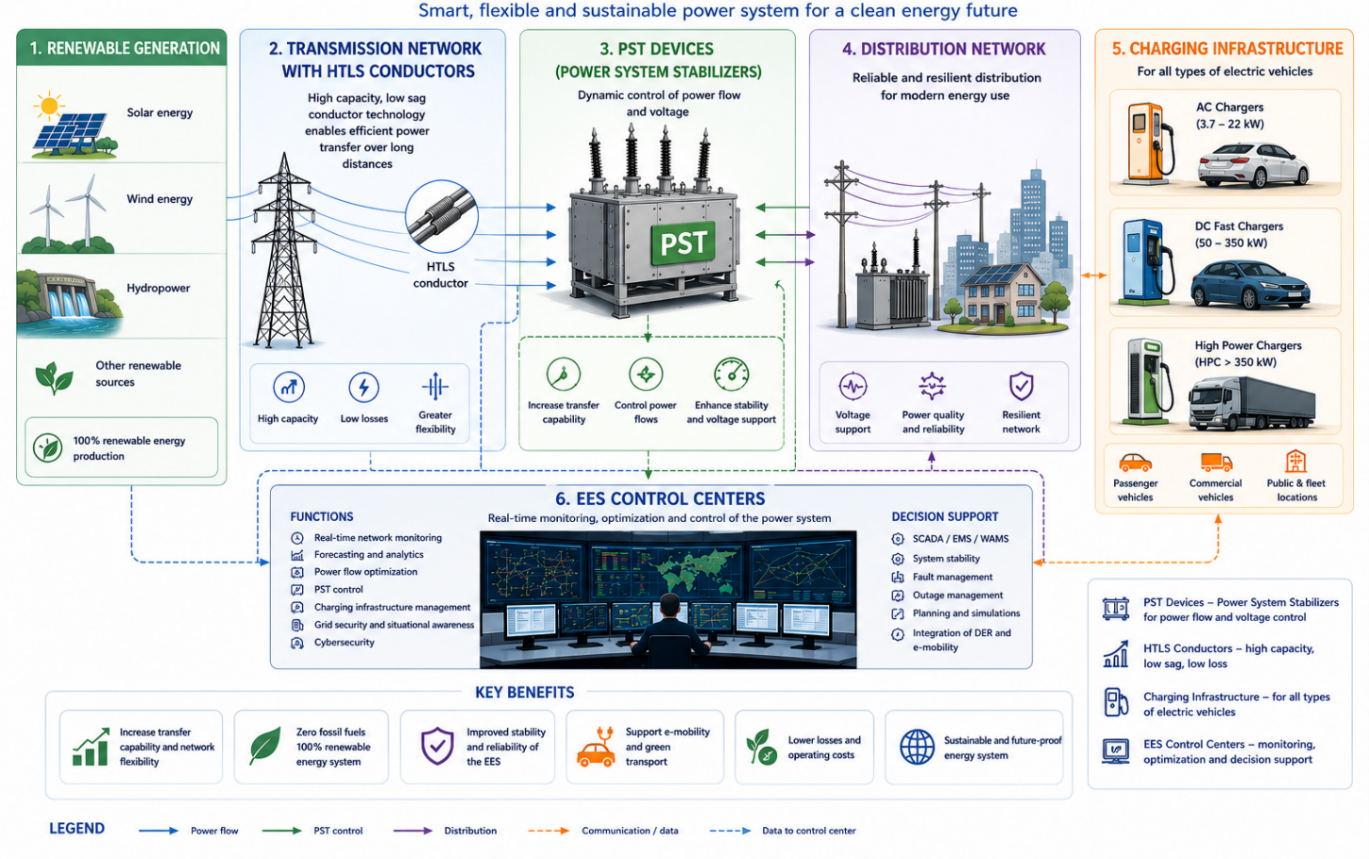
The TUNE project will enhance the controllability, resilience, and flexibility of the electricity transmission networks in Slovenia, Slovakia, and Hungary, enable further increase in the utilization of transmission networks, reduce the probability of system breakdowns, increase trading opportunities, and reduce price differences between the markets of Central and South-Eastern Europe.
It will optimize forecasting and consequently reduce the increasing costs of balancing the system. It will increase the control, security, and stability of the transmission network and enable the development of electric mobility.
Challenges
Slovenia, Slovakia, and Hungary occupy a strategic geographical position within the European electricity system, serving as key transmission corridors between Central Western, Central Eastern, and South-Eastern Europe. Their transmission networks play a vital role in enabling cross-border electricity trading and maintaining the security of supply across the European Internal Energy Market (IEM).
The accelerating deployment of renewable energy sources, increasing electrification, and the synchronisation of Ukraine's electricity system with the Continental European grid are creating unprecedented operational challenges. Electricity flows are becoming more dynamic and less predictable, with fluctuations occurring over timescales ranging from minutes to days. As important transit countries, Slovenia, Slovakia, and Hungary are particularly exposed to these changing patterns.
The interaction between the electricity and gas sectors further increases the complexity of operating the transmission system. Fluctuations in gas-fired electricity generation, evolving energy supply patterns, and the future integration of hydrogen infrastructure all point to the need for a more flexible, resilient, and digitally managed transmission network.
Recognizing these challenges, the transmission system operators (TSOs) of Slovenia, Slovakia, and Hungary have joined forces to develop a coordinated investment program. By implementing advanced technologies that exceed the capabilities of conventional grid infrastructure, the project will improve network stability, operational flexibility, and cross-border cooperation, while delivering significant benefits to electricity markets and consumers across the region.
Project Scope
The project includes the following key activities:
- Implement power control systems, combined with the upgrade of the existing SCADA and control centre in:
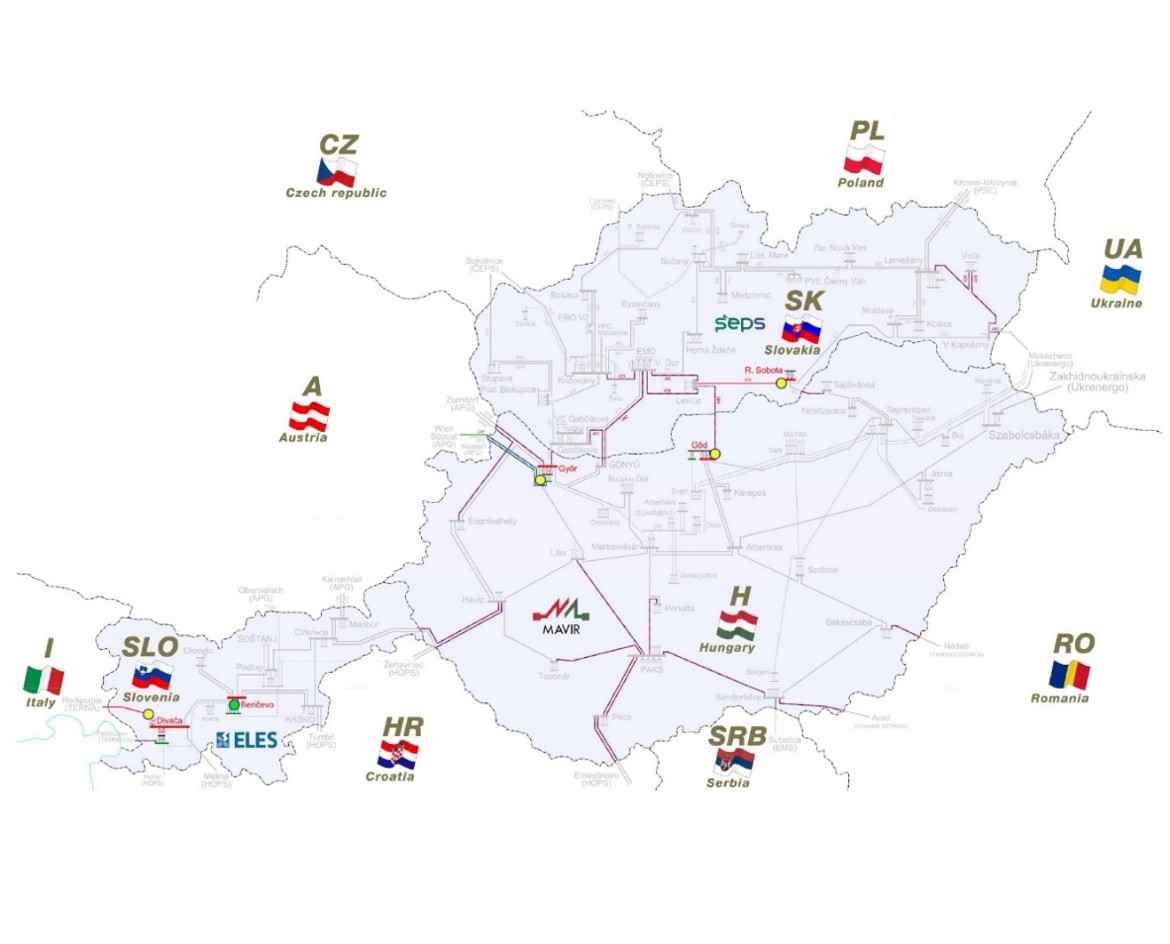
- Substation Divača (SI) on a 400 kV interconnection between Slovenia and Italy.
- Substation Győr (HU) on a 220kV interconnection between Austria and Hungary
- Substations Göd (HU) and R. Sobota (SK), or alternatively in the region of Veľký Ďur (SK) (not decided yet).
- Implementation of Dynamic Line Rating (DLR) on 9 power transmission lines of Slovakia
- Installation of the Ambient Adjusted Rating (AAR) systems on 22 power transmission lines in Hungary
- Implementation of high-temperature line technologies (HTLS):
- on the Slovenian part of the cross-border 220 kV line Divača-Padriče
- on the Slovak 400 kV overhead lines between substations Veľký Ďur (SK), Levice (SK), and R. Sobota (SK), including implementation of high-temperature line technologies on rope busbar systems in respective Slovak substations,
- Upgrade of Control System (Hardware and Software) (SI)
- Establishment of a system to ensure adequate response (P and Q) from distribution generation to ensure the reliability of the electrical energy system
- Development of the platform for advanced charging on private charging stations for electric vehicles
- Establishment of the new MV grid connections to support future flexible Megawatt mobility charging parks that will serve multiple charging point operators
Benefits
The TUNE project will deliver substantial benefits for the regional and European electricity system by:
- Increasing the penetration and use of renewables across the EU.
- Improving transmission system stability, particularly during evening hours when solar generation declines and electricity demand increases.
- Reducing electricity price disparities between South-Eastern, Central-Eastern, and Central-Western European market zones by improving cross-border power flows.
- Increasing the flexibility of the European electricity system in line with the findings of the ENTSO-E System Flexibility Needs for the Energy Transition study and the objectives of the EU Action Plan for Grids,
- Enhancing electricity export capabilities to Ukraine during periods of tight supply-demand balance in Central and Eastern Europe.
- Strengthening cross-border electricity trading while reducing the need for additional flexibility resources.
- Enable the development of electric mobility.
- Increase security and stability of the system.
Timeline
- December 2024: Application for the 2nd PCI/PMI list
- April 2026 : Entry into force of the 2nd PCI/PMI list
- September 2026: Application for CEF co-funding
- 2027-2028: Permit granting
- 2028-2032: Construction
- 2029-2032: Commissioning
Locations
Documents
Public Consultations
20.7.2026 Divača (SI)
Environmental Impact Assessment
In preparations
Current Status
Preparing for CEF Application
Project Profile
PCI/PMI List: 2nd PCI/PMI list
PCI/PMI Code: 12.7
Partners: ELES, MAVIR, SEPS
Commissioning Date: 31. December 2032
Estimated investment: Approximately EUR 380 million
Implementation Status: Planned but not yet in permitting
Contact
E-mail: tune@eles.si
Project coordinator: Simon Tot, ELES
Project leader in Hungary: Branislav Pilat, SEPS
Project leader in Slovakia: Gábor Szücs, Mavir
Last Update: 21.07.2026